
Last updated November 2, 2026
 Sweep & inspection
 Caps & crowns
 Flue relining
 Masonry repair
 Gas fireplace service
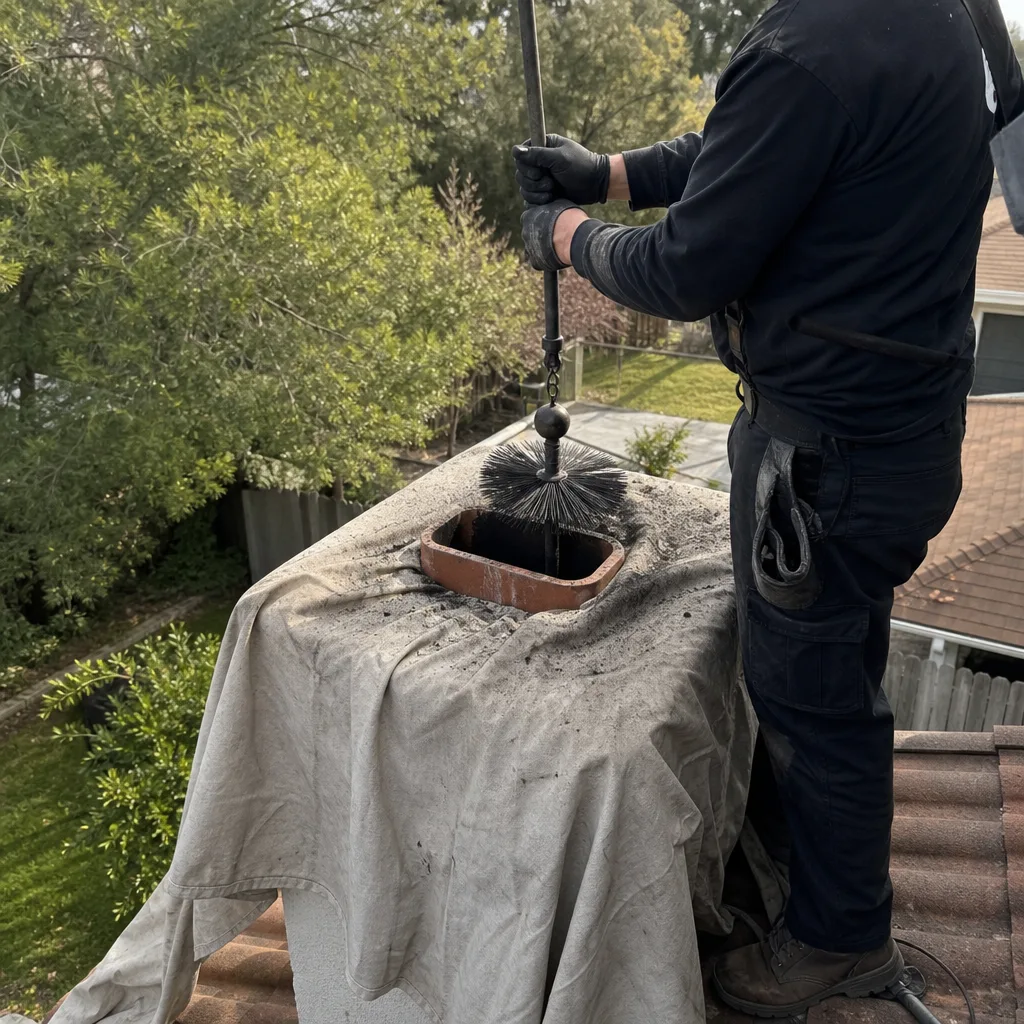
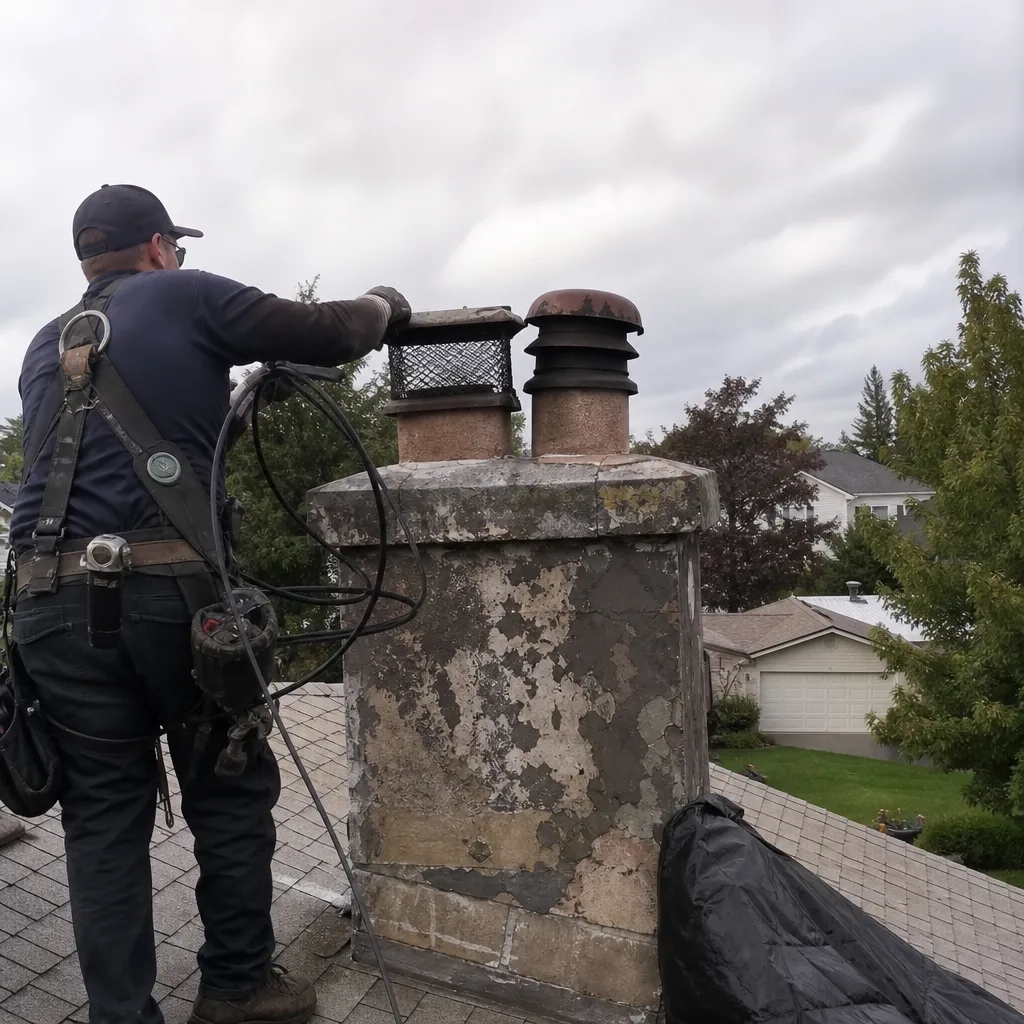
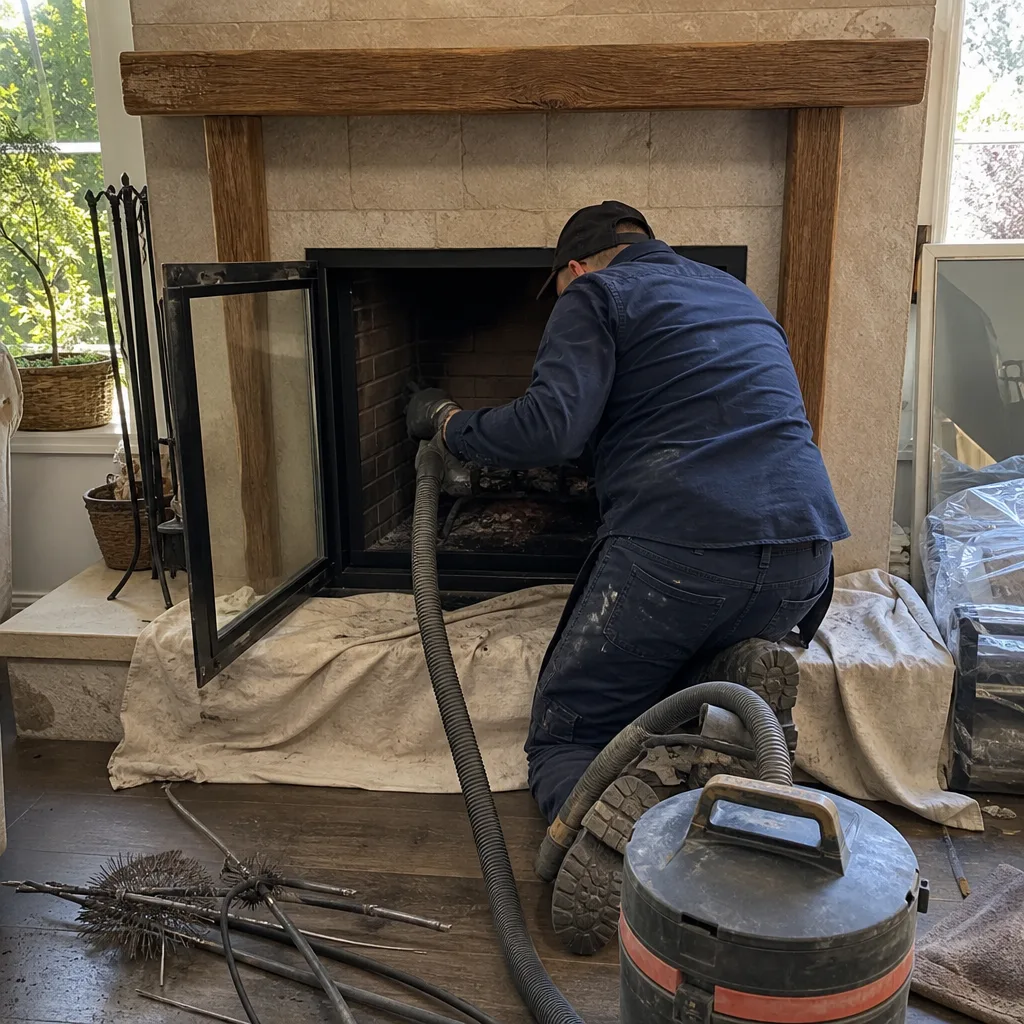
Level 1 sweep and inspection to the NFPA 211 annual standard - flue, crown, cap, and flashing checked and photographed
Chimney sweep logs do not sweep chimneys. They loosen some creosote - which then falls where a brush and vacuum still have to collect it.
Chimney Sweep Maintenance Checklist for Rancho Cordova Homeowners
Most chimney checklists you’ll find online read like they were written for a house in Vermont or Minnesota. They assume you’re burning steadily from October through March, that your biggest enemy is creosote from slow smoldering fires, and that spring cleaning means waiting for the snow to melt. Rancho Cordova doesn’t work that way. The Sacramento Metropolitan Air Quality Management District restricts wood burning on Spare the Air days, sometimes for long stretches through the core of winter. Which creates a pattern we see constantly in Rancho Cordova homes: homeowners burn intensely whenever burning is allowed, which stacks creosote and soot faster than any once-a-year rule of thumb accounts for. This guide gives you a maintenance checklist sequenced around the valley’s actual calendar, the air quality rules that govern when you can burn, and the specific construction patterns of post-1980 Rancho Cordova homes.
Styles & brands we work with
- Sweep & inspection
- Caps & crowns
- Flue relining
- Masonry repair
- Gas fireplace service
Quick Answer
A proper chimney maintenance checklist for Rancho Cordova homeowners runs on a seasonal rhythm: pre-burn inspection and sweep in September, a mid-season flashlight check in January, and post-season closure work in March. Because SMAQMD burn-day restrictions compress your burning into intense windows, you should inspect creosote buildup more often than once a year, and you should treat any visible quarter-inch deposit as a signal to schedule a professional chimney sweep. If you burn wood on every allowed burn day, plan on two sweeps per season.
Table of Contents
- Why Rancho Cordova Changes the Standard Checklist
- The Rancho Cordova Month-by-Month Chimney Maintenance Calendar
- How to Self-Assess Creosote Buildup Between Professional Visits
- Damper and Smoke Chamber Checks for Prefabricated Fireplaces
- Ground-Level Visual Checks: Cap, Crown, and Flashing
- Record-Keeping That Protects Your Insurance and Resale Value
- Common Mistakes to Avoid
- When to Call a Professional
- Frequently Asked Questions
- The Bottom Line
Why Rancho Cordova Changes the Standard Checklist
Rancho Cordova sits in the Sacramento Valley, where summer temperatures routinely push past 100 degrees and winter nights dip near freezing. Your chimney goes through thermal cycling that most national checklists don’t anticipate: months of total dormancy in extreme heat, followed by sudden heavy use when the first cold snap hits and burn days align. The clay flue tiles in older Rancho Cordova chimneys, particularly in homes built between the 1950s and 1970s along the older corridors like White Rock and Cordova Meadows, absorb and release heat unevenly. That uneven cycling is exactly what causes hairline cracks to spread. When you add in the regional air quality picture, the standard “sweep once a year before winter” advice falls apart. SMAQMD burn restrictions mean you’re not burning gradually through the season. You’re burning on permitted days, which cluster around cold spells. A single intense weekend of burning can deposit more creosote than a month of occasional fires. That’s the core reason this checklist is built around Rancho Cordova’s calendar, not a generic seasonal template.
The other factor is construction age. Homes built after 1980 in Rancho Cordova developments like Anatolia and Sunridge predominantly use prefabricated metal chimneys, not masonry. These systems are engineered and tested as complete units, which means the checklist for them is different from what you’d follow for a traditional brick chimney. You can’t apply masonry logic like “tap the tiles to check for cracks” to a metal flue. Knowing which system you have is step one, and the checklist below tells you how to handle both.
The Rancho Cordova Month-by-Month Chimney Maintenance Calendar
September: Pre-Burn Season Preparation
September is the single most important month on the Rancho Cordova chimney calendar. Temps have dropped out of the triple digits, the first burn days of the season haven’t arrived yet, and you still have a scheduling window before every sweep in the Sacramento area gets booked solid. This is when you do the real prep work.
- Schedule your professional chimney sweep. If you haven’t had a sweep in the past 12 months, book one now. If you burned heavily last season, book one even if it’s been less than 12 months. Heavy burn seasons in Rancho Cordova often leave behind creosote that the annual rule doesn’t account for.
- Perform a ground-level visual inspection. Look at the cap, crown, and flashing from the ground using binoculars if needed. Check for rust, missing sections, cracked mortar, or anything that looks shifted. Details on what to look for are in the visual checks section below.
- Test the damper. Open and close it fully. It should move freely without grinding or sticking. If it’s hard to operate, note it for the sweep visit.
- Check the firebox interior. Look for cracked firebrick, gaps in mortar joints, or loose panels. Shine a flashlight up the flue to see if there’s an obvious heavy coating (see creosote self-assessment below).
- Clean the smoke shelf if accessible. The smoke shelf directly behind the damper collects debris and soot. If you can see visible accumulation, the sweep visit will handle it, but knowing it’s there helps you describe the condition accurately.
October: First Burn Protocol
October in Rancho Cordova usually brings the first stretch of nights cold enough to justify a fire, which means the first burn days start getting used. Before you light that first fire, verify the sweep is done and the system is clean. When you do light up, keep the first fire small. A modest fire lets the system warm gradually, which reduces thermal stress on the flue tiles or metal liner. After that first burn, go outside and look at the smoke. If you see smoke exiting the cap normally, good. If nothing seems to be exiting, or smoke seems to linger around the cap, that’s a draft problem or a blockage. Note it and monitor on the second burn.
November Through February: Mid-Season Vigilance
This is the heavy burning window, and in Rancho Cordova it’s governed by SMAQMD regulations. You already know the drill: check the burn status before lighting anything. Burn days cluster around cold snaps, so your actual usage can be intense for a week, then dormant for three. That pattern is the number one reason we recommend a mid-season flashlight check. Mark January 1st on your calendar, or just make it a habit on the first cold snap after New Year’s. Shine a light up the flue and look for the deposit thickness. If you’re seeing a quarter-inch or more of creosote anywhere, schedule a second sweep. If you hear unusual popping from the flue during burns, that’s often the sound of creosote expanding and contracting, and it’s another trigger to call. The mid-season check takes five minutes and can prevent a chimney fire, because the intense-use pattern in Rancho Cordova means you can hit dangerous accumulation levels by February even if you were clean in October.
March: Post-Season Closure
By March, the burn days are winding down and you’re heading into the long dormant stretch. The post-season closure is about protecting the system during the hot months. Here’s the sequence:
- Schedule your post-season sweep if you burned heavily. Many Rancho Cordova homeowners find two sweeps per season works best: one in September before the season and one in March after heavy use. A post-season sweep also prevents creosote from sitting in the flue through the 100-degree summer, where heat and humidity can accelerate corrosion.
- Close the damper fully. An open damper all summer is an open passage for hot air exchange, and it lets insects and debris accumulate. If you have a top-mounted damper, same instruction: close it.
- Check for rust or water staining around the firebox. Summer thunderstorms are rare in Rancho Cordova but not unheard of. Water intrusion signs caught in March are masonry problems caught early.
- Consider a chimney cap inspection. Birds nesting in the spring is a real problem in Rancho Cordova. A secure cap with intact mesh keeps starlings and sparrows out. If you hear birds inside the flue in March or April, that’s a nesting situation you want resolved before the next season.
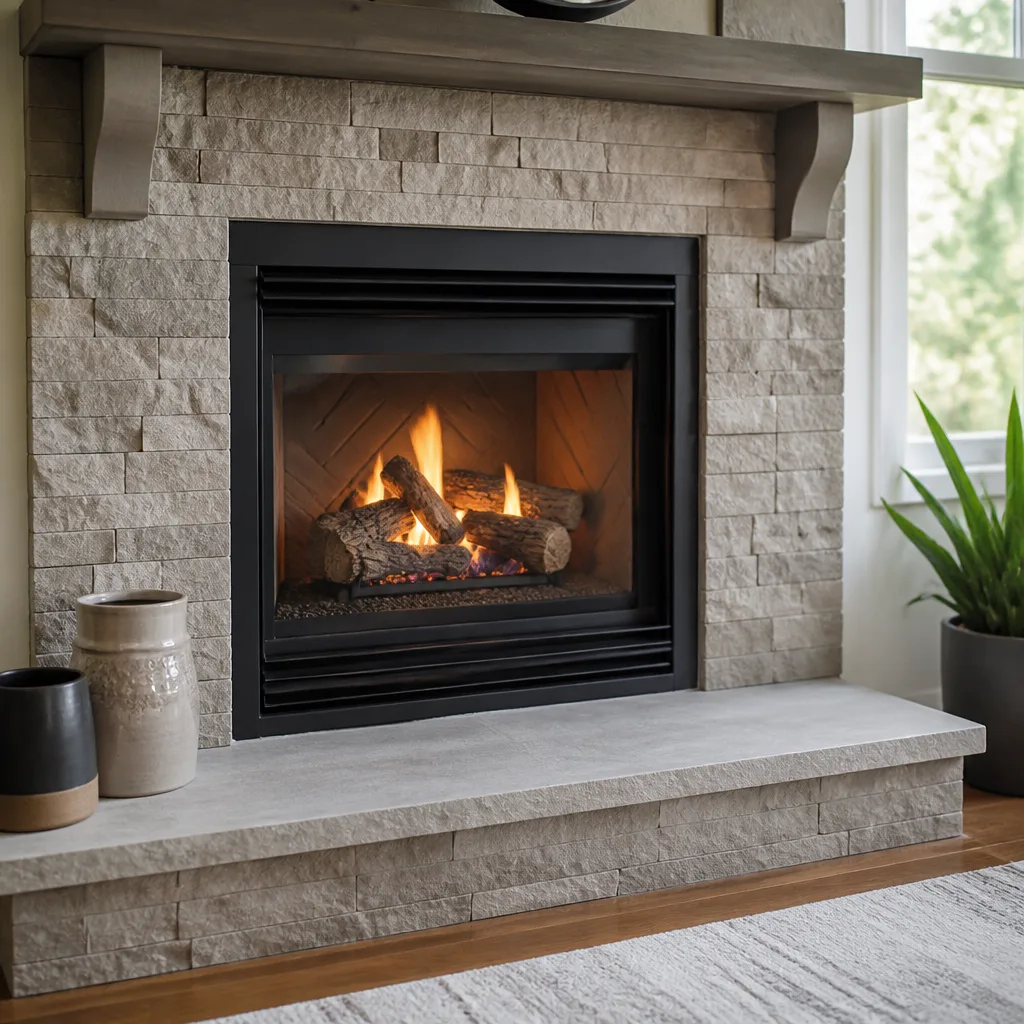
If your chimney serves a gas or pellet appliance rather than wood, the calendar is simpler. Gas and pellet systems don’t create creosote, but they do accumulate soot, dust, and debris. One annual inspection is sufficient for gas, though pellet stoves benefit from a mid-season cleaning of the burn pot and venting path. The SMAQMD burn restrictions don’t apply to most gas appliances, but pellet stoves have their own efficiency considerations that warrant staying on top of cleanliness.
How to Self-Assess Creosote Buildup Between Professional Visits
You don’t need professional equipment to check for dangerous creosote buildup. You need a strong flashlight, a mirror if your firebox angle makes direct viewing difficult, and a basic understanding of what the three deposit colors mean. Here’s the method and the interpretation.
- Wait for the firebox to cool completely. Never check a warm chimney. You want safe working conditions and accurate color assessment, which only happens on cool surfaces.
- Shine the flashlight up the flue from inside the firebox. Angle the beam to catch the side walls. Move the light slowly around the full circumference if your chimney is round, or across each wall if it’s square or rectangular.
- Look at the color of the deposits.
There are three deposit types, and they tell you different things:
- Brown, flaky, or dusty deposits are the first stage of creosote. This is normal after a season of burning. It’s easily swept and doesn’t signal danger, but it does need removal eventually.
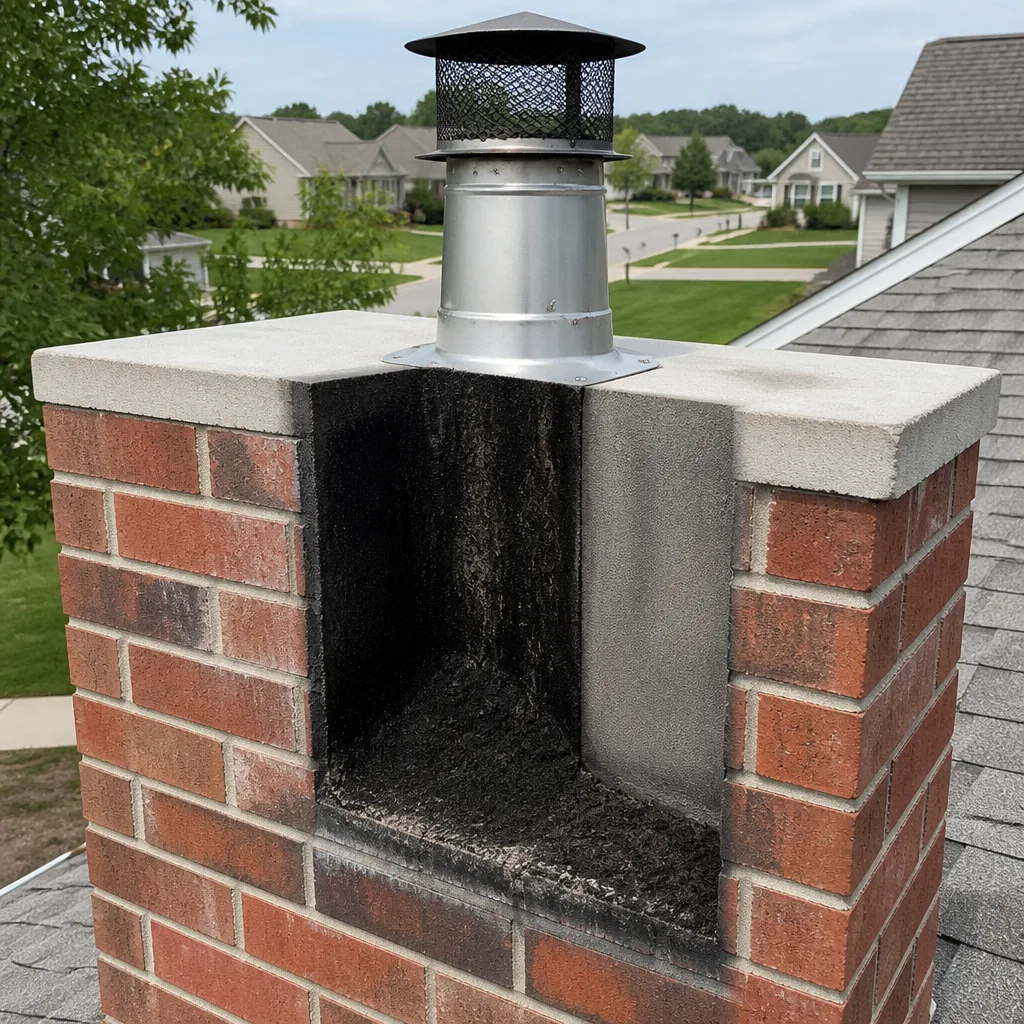
- Shiny, black, tar-like glaze is stage-two creosote. In Rancho Cordova, we see this most often following intense burn windows where homeowners light hot fires for several days running, then go dormant. This glaze is much harder to remove than stage one and significantly more flammable. If you see shiny black deposits thicker than an eighth of an inch, schedule a sweep.
- Stage-three creosote looks like a hardened, glossy, sometimes puffy buildup that has begun layering. It’s extremely flammable and often requires chemical treatment or mechanical removal beyond a standard sweep. This is the type that most commonly fuels chimney fires. If you see this, stop burning immediately and schedule an inspection.
In our experience, Rancho Cordova homes that burn exclusively on allowed burn days tend to hit stage two faster than the national average because the intense burns produce hotter flue gases that condense as they hit the cooler upper chimney, creating that shiny glaze. If you see anything you’d describe as glossy or glassy, that’s your signal.
Damper and Smoke Chamber Checks for Prefabricated Fireplaces
Most homes built in Rancho Cordova after 1980 use prefabricated, factory-built fireplaces. These are metal units with metal flues, often manufactured by brands like Majestic, Heatilator, or Superior. The checklist for these is specific, because not all prefab systems have a traditional smoke chamber the way masonry fireplaces do. Here’s what to watch for.
If you have a masonry fireplace with a smoke chamber
- Check that the damper opens and closes smoothly. A damper that grinds, sticks, or doesn’t seal properly fails in two ways: it can’t hold heat in when closed, and it can’t fully clear the flue path when open. Both affect burn quality.
- Inspect the smoke chamber walls in the firebox using your flashlight. The smoke chamber is the sloping area above the damper and below the flue. In masonry systems, this area often has corbeled brick that catches soot aggressively. Look for heavy accumulations. The smoke chamber is one of the most commonly missed sweep areas in DIY and cut-rate cleanings.
- Check for cracked or spalling brick in the smoke chamber. If you see loose mortar or brick fragments, don’t burn until a professional looks at it. Debris falling into the smoke chamber can create a draft restriction.
If you have a prefabricated metal fireplace
- Never assume the damper is the only airflow control. Many prefab units have a fixed damper that is not adjustable, or a damper that operates differently than a masonry fireplace. Check your unit’s manual if you have it. If you don’t, note the make and model during your next sweep visit.
- Check for rust on the interior firebox walls. Metal units corrode over time, especially if the chimney cap is compromised. Rust on the firebox walls is a sign water is getting in, and it warrants a professional inspection.
- Look for separation or gaps at the panel seams. Prefab fireboxes are panels assembled at the factory. If panels separate or warp from heat, the system loses its structural integrity. Any visible seam gap needs to be evaluated.
- Check the refractory panels. The brick-like panels inside a prefab firebox are not structural brick. They’re refractory insulation panels. Cracked panels are a replaceable item and a warning sign of overfiring. Don’t keep burning if the panels are cracked through.
One distinction that matters for Rancho Cordova: older homes in White Rock, Cordova Meadows, and along Folsom Boulevard are more likely to have true masonry chimneys, while the newer subdivisions in Anatolia, Sunridge, and Kavala Ranch are predominantly prefab. If you’re not sure which you have, the next professional sweep visit will tell you, and it’s worth knowing so you can follow the right checklist.
For a deeper look at how a professional sweep handles these systems, see our guide to Chimney Sweep in Rancho Cordova. Bedrock Chimney Sweep works on both masonry and prefab systems throughout Rancho Cordova, and we show you what we find, including the condition of your damper and smoke chamber, before we recommend any work.
Ground-Level Visual Checks: Cap, Crown, and Flashing
You don’t need to climb on the roof to evaluate most of the critical chimney conditions. A careful ground-level inspection, ideally with binoculars, can identify most issues worth scheduling a professional for. These are the items to look at, from the safety of your yard.
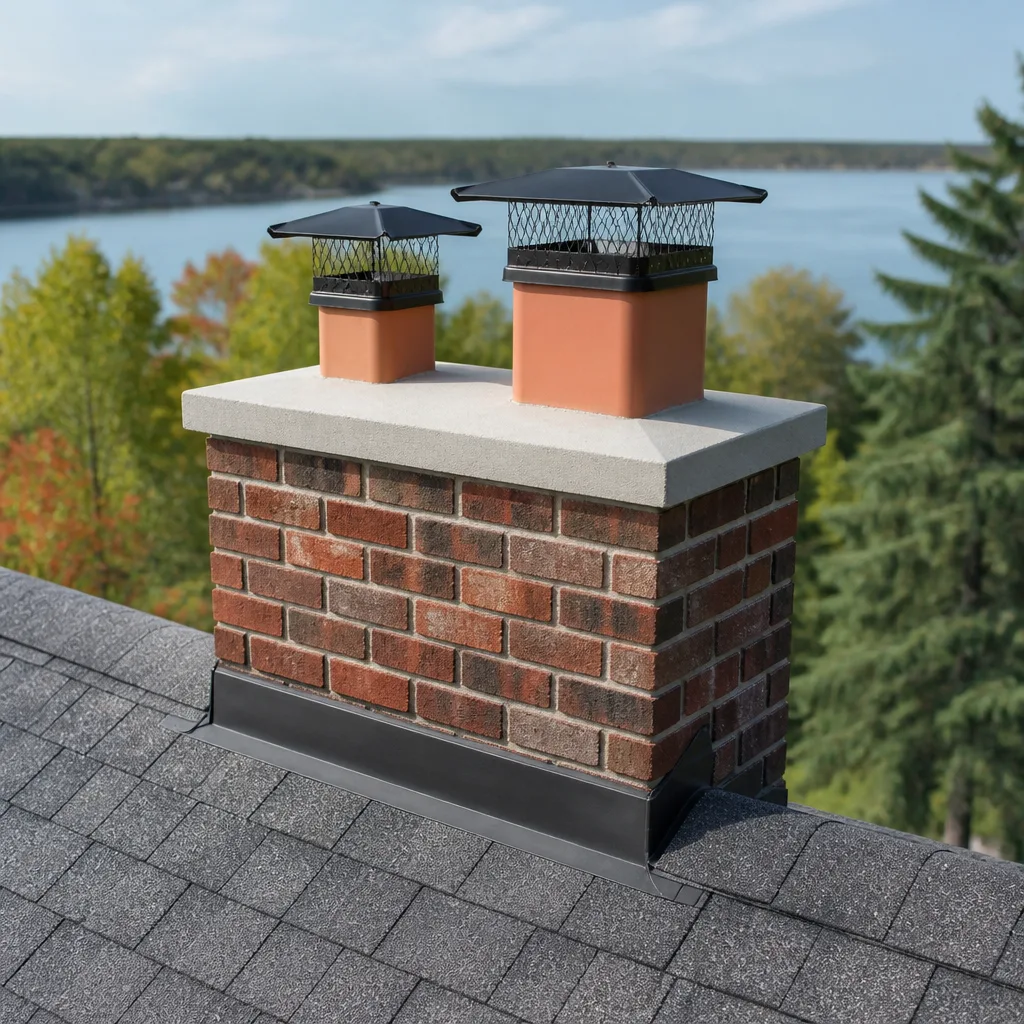
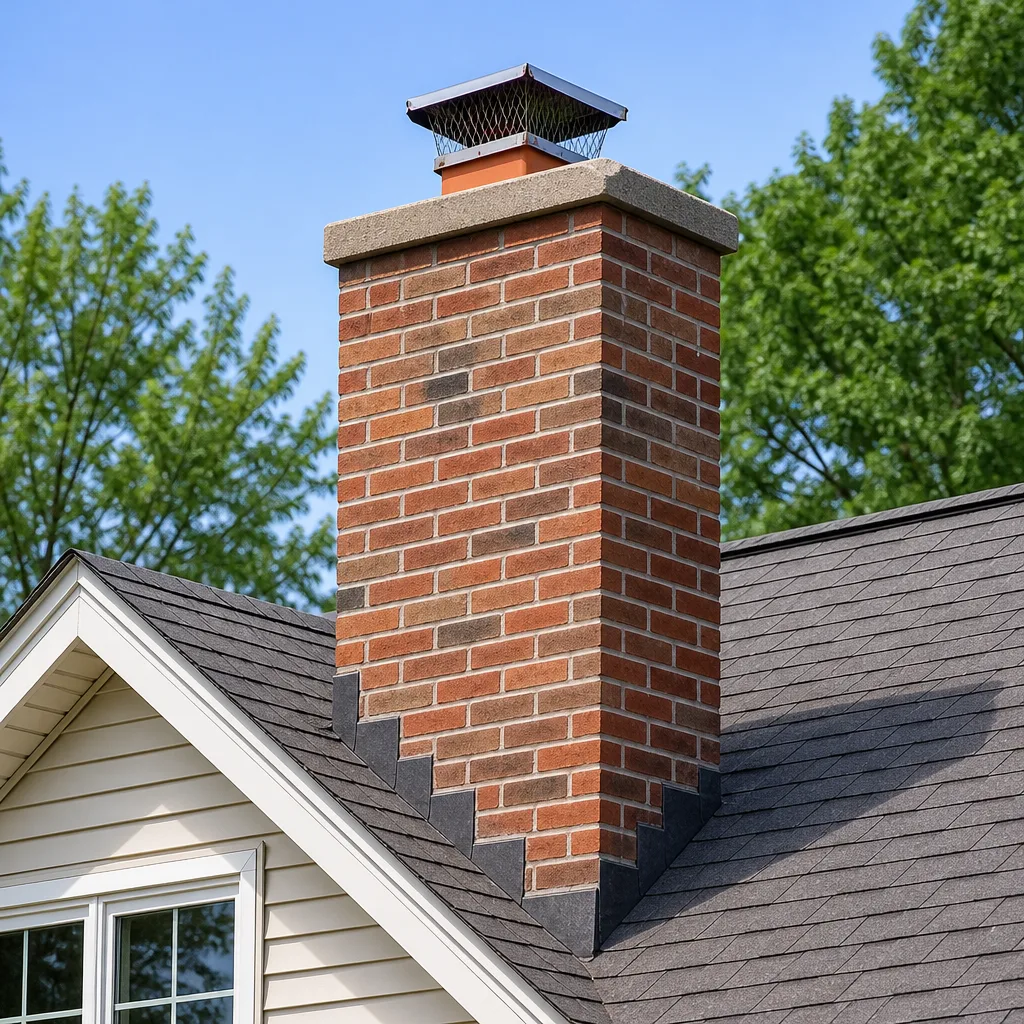
The chimney cap
The cap is the metal assembly at the top of the flue. It keeps rain, birds, and debris out. What to check from the ground:
- Is it present? A missing cap is the single most common cause of preventable water damage in Rancho Cordova chimneys. Rain in the Sacramento Valley is concentrated, and a single winter storm can send enough water down an uncapped flue to damage the firebox, the damper, and the smoke chamber.
- Is it rusted through? Surface rust is cosmetic, but rust that has created holes means the cap needs replacement. A rusted-out cap no longer keeps rain out.
- Is the mesh intact? The mesh side walls on a cap keep birds and animals out. Ripped or missing mesh is an open invitation for nesting. Rancho Cordova sees starlings, sparrows, and squirrels in flues every spring when caps fail.
The chimney crown
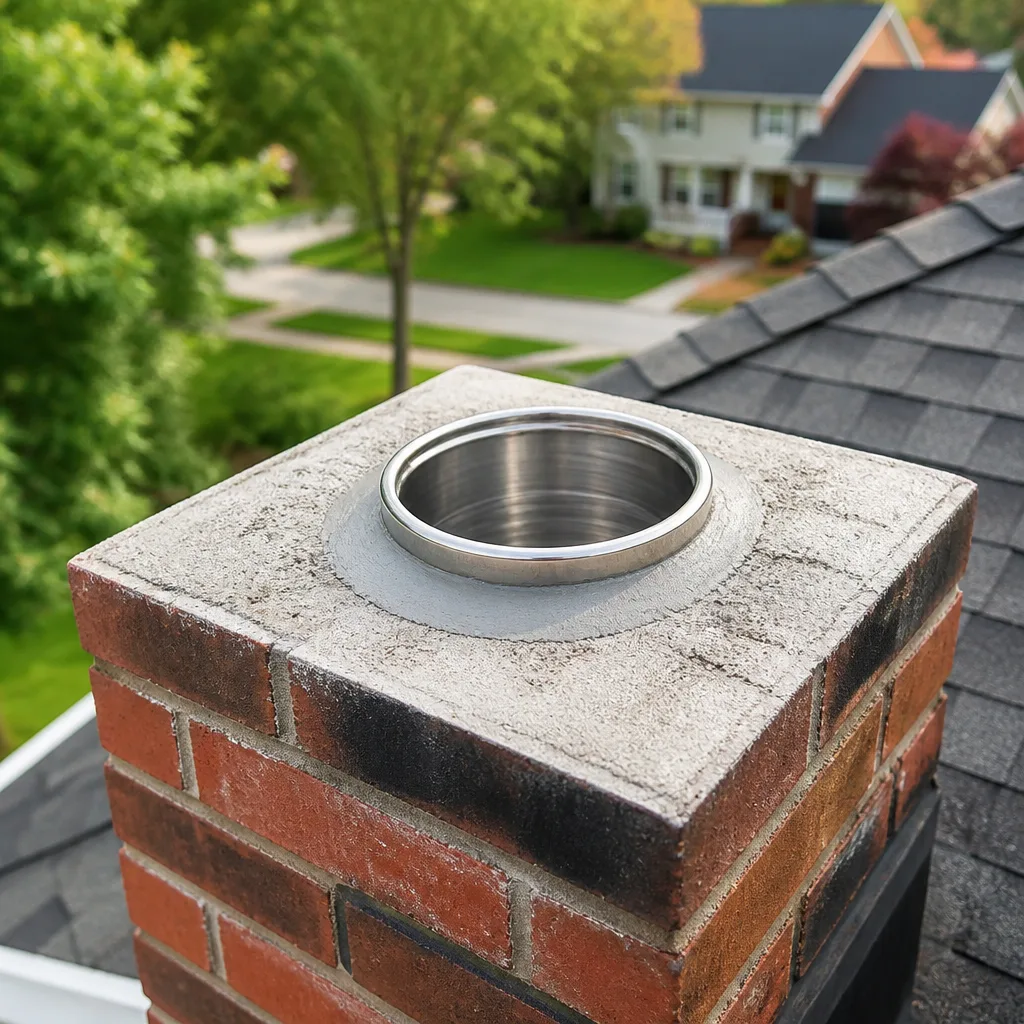
The crown is the concrete or mortar top surface of a masonry chimney. What to check:
- Cracks. A cracked crown lets water into the masonry structure itself, leading to spalling brick and deteriorated mortar joints. Hairline cracks widen over time, and the freeze-thaw cycle in Rancho Cordova winters accelerates the damage even though freezes are uncommon.
- Crumbling edges. If the crown edges are eroding, the crown is likely original construction with insufficient overhang or no drip edge. Modern crown construction includes a drip edge that directs water away from the brick; older construction often doesn’t have it.
The flashing
Flashing is the metal strip where the chimney meets the roof. What to check:
- Lifted or separated flashing. If flashing pulls away from the chimney, water gets behind it and into the roof structure. You can often see this from the ground as a visible gap or a piece of metal that is bent out of position.
- Rust or deterioration. Old galvanized flashing eventually rusts through. Replacing flashing proactively is cheaper than repairing water damage to ceilings and framing.
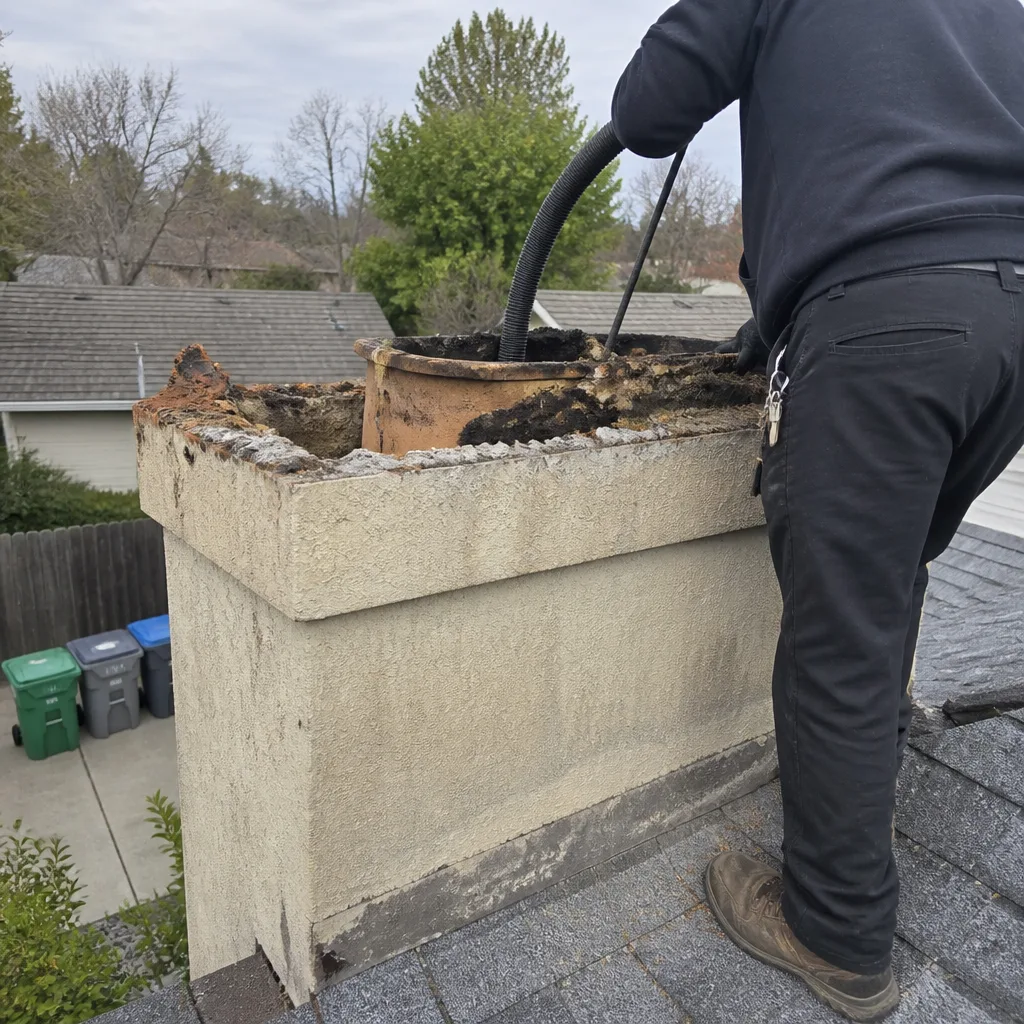
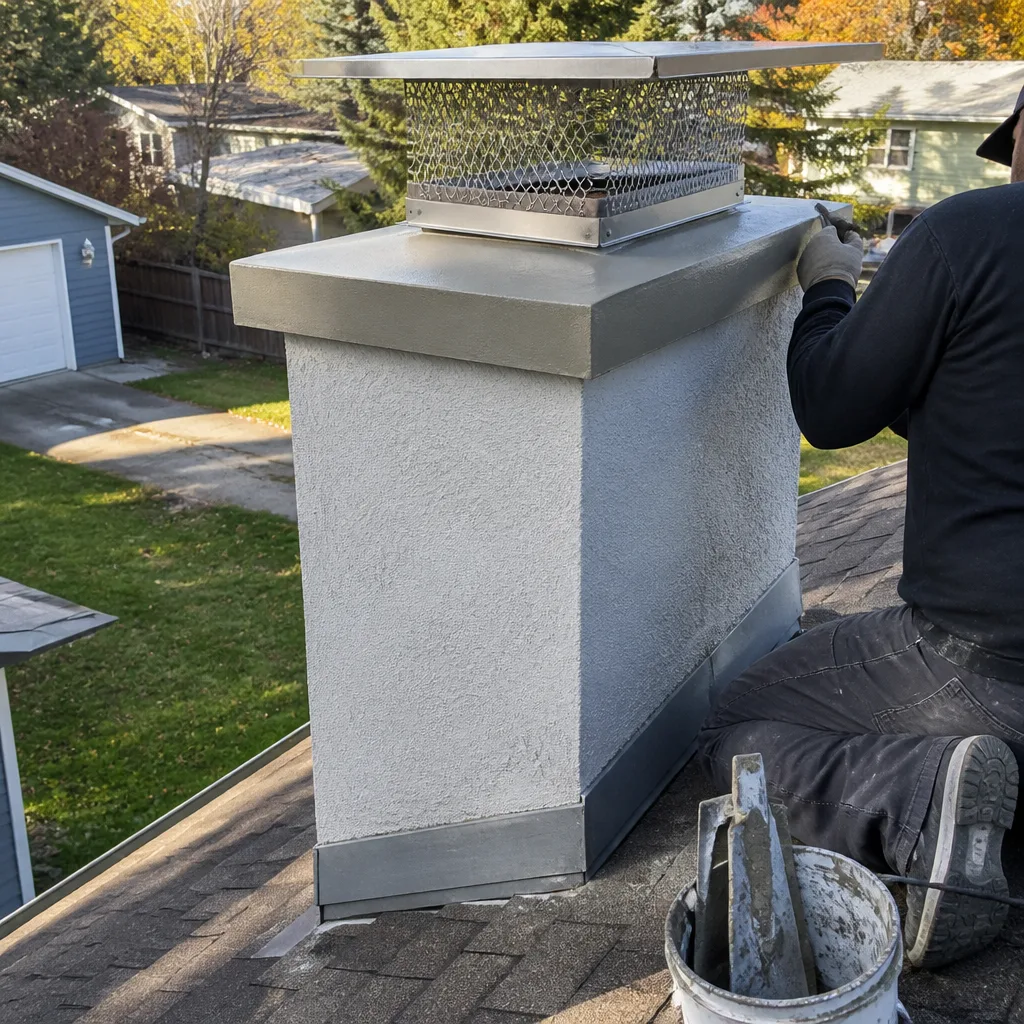
If you see any of these conditions, the right repair is not the easy one. The professional-grade approach uses materials specified by credentialed chimney engineers, and we stock brands like Gelco and Olympia Chimney for cap and crown work in Rancho Cordova, not hardware-store substitutes. For more on what repair actually involves, see our guide to Chimney Repair in Rancho Cordova.
Record-Keeping That Protects Your Insurance and Resale Value
Most Rancho Cordova homeowners don’t document their chimney maintenance, and it costs them in two specific ways: insurance claims and resale disclosures. Here’s what to track.
What to record after each service visit
- The date of service. This is the foundation of your maintenance history.
- The company name and technician name. Person-level attribution is useful if you need to defend the quality of a past inspection.
- The condition found. Whether the flue was clean or had stage-two creosote, cracked tiles, or water damage. The condition report is the evidence that you maintained the system.
- The work performed. Sweeping, cap replacement, crown sealing, liner installation, etc. Be specific.
- Photos. If you have any photos from the inspection, keep them. They’re the best evidence available.
Why it matters for insurance
If you file a chimney fire claim, the insurance adjuster will almost certainly ask when the chimney was last cleaned. If your answer is “I think about three years ago,” your claim is less defensible than if you can produce a dated service record showing a sweep nine months before the incident. Insurance companies look for maintenance gaps, and the absence of records is treated as a maintenance gap. This is true for dryer vents as well. We recommend documenting your Dryer Vent Cleaning in Rancho Cordova on the same schedule, because dryer vent fires have the same insurance defense dynamics.
Why it matters for resale
California disclosure requirements ask sellers to report known chimney conditions. If you have a maintenance history showing regular sweeps and documented repairs, you can disclose accurately and justify your asking price. If you have no records, you’re stuck making a vague disclosure that invites buyer concern. A well-documented chimney is a quiet selling point, particularly in Rancho Cordova where many homes have original chimneys dating from the 1960s and 1970s. When you keep records, you also know when a liner was last evaluated, which matters because many older Rancho Cordova chimneys have unlined or originally clay-lined flues that may need attention. For perspective on when the right repair is resurfacing rather than relining, ask about the HeatShield ceramic resurfacing process on your next Bedrock Chimney Sweep home consultation.
Common Mistakes to Avoid
- Skipping the pre-season sweep because you “barely used it last year.” In Rancho Cordova, usage is governed by burn days, not by your memory. A single intense burn weekend creates more creosote than weeks of casual use. If you burned at all last season, the pre-season sweep is justified.
- Ignoring the burn-day calendar until it’s too late. The SMAQMD restrictions change your burn pattern. Burning intensely whenever allowed, without adjusting your maintenance expectations, is the fastest path to dangerous creosote accumulation.
- Checking creosote only once a year. The annual check assumes steady, moderate use. Rancho Cordova’s burn pattern is episodic. A January flashlight check takes minutes and can prevent a chimney fire during the February burn window.
- Confusing a visible cap from the ground with a functional cap. A cap can look intact from the driveway but have rusted mesh on the far side. Binoculars help. If you’re unsure, schedule a professional look rather than assuming.
- Assuming a prefab fireplace doesn’t need maintenance. Prefab systems have their own failure modes: rust, panel separation, and refractory cracking. Neglecting them because “it’s not a real brick chimney” leads to expensive replacements that were preventable with early detection.
- Failing to document service visits. A swept chimney with no record is only half-protected. Insurance claims and resale disclosures both hinge on documentation. Record the date, the company, the condition, and the work performed, every time.
- Treating the smoke chamber as someone else’s problem. The smoke chamber catches more creosote per square inch than any other part of the firebox, and it’s the most commonly skipped area in cut-rate cleanings. If your sweep doesn’t mention the smoke chamber, ask about it.
When to Call a Professional
Some chimney conditions are safe to monitor, and some require a professional immediately. Call a chimney professional in Rancho Cordova if you see glossy black glaze inside the flue, hear popping sounds from the chimney during burns, notice water staining on the ceiling near the chimney, smell smoke in the house when the fire is banked or during damp weather, see birds or animals around the chimney, or find that smoke consistently backs up into the room rather than drafting up. If you’re ever unsure, professional evaluation is cheaper than the damage that follows a chimney fire or structural failure. Bedrock Chimney Sweep offers free estimates in Rancho Cordova. Call (877) 752-8010 to schedule an inspection.
Frequently Asked Questions
A chimney in Rancho Cordova that burns wood on every allowed burn day needs sweeping twice per season: once before the burn season in September and once after heavy use in March. Light or occasional burners can often get by with one annual sweep, but the compressed burn pattern created by SMAQMD restrictions makes the twice-per-season schedule the safer default for regular wood burners. Call (877) 752-8010 and we’ll help you figure out the right interval for your actual usage.
A standard chimney sweep in Rancho Cordova typically costs $180 to $340 depending on the system type, the condition of the flue, and the level of creosote present. Masonry chimneys with heavy stage-two creosote tend to run higher because the removal is more labor-intensive. Gas and pellet systems run on the lower end. The exact price depends on your specific chimney, and Bedrock Chimney Sweep gives free estimates before any work is scheduled.
Not always. A liner only needs replacement when it’s cracked, separated, or deteriorated to the point that it can no longer safely contain the flue gases and heat. In many Rancho Cordova homes with older clay liners, the damage is repairable using HeatShield ceramic resurfacing, which restores the interior surface without the cost and disruption of a full reliner. The determination requires a camera inspection, and we show you exactly what we see before recommending any liner work.
Creosote accumulates, water intrusion goes undetected, and small problems compound. At minimum, skipping maintenance means a more expensive cleaning when you finally schedule one. At worst, the accumulated creosote ignites and you have a chimney fire, or water damage progresses to the point that masonry repair or liner replacement becomes necessary. The cost of a missed sweep is almost never just the cost of one sweep.
Gas fireplaces don’t produce creosote, but they do accumulate soot, dust, and sometimes debris from animals or insects in the venting system. An annual inspection for gas systems is sufficient to verify the venting is clear and the components are in good condition. Blocked gas vents are a carbon monoxide risk, so the annual check serves the same safety function as a sweep for a wood-burning chimney.
You can perform flashlight checks and ground-level visual inspections safely. A full chimney sweeping involves working on the roof, reaching down the full flue length, and using equipment most homeowners don’t own, and it carries genuine fall and injury risk. Homeowners in Rancho Cordova with elevated rooflines or complex roof pitches should leave the roof work to professionals who carry the right insurance and equipment. We’re happy to show you what to check yourself and to handle the parts that aren’t safe or practical for a homeowner, and we publish more guides & resources to help.
The Bottom Line
The right chimney maintenance checklist for Rancho Cordova is built around the burn-day calendar, not the calendar year. Pre-season prep in September, mid-season vigilance in January, and post-season closure in March. Check creosote color and thickness with a flashlight between professional visits, catch cap and crown damage from the ground before it becomes water damage inside the home, keep records defensible for insurance and resale, and never assume a prefab fireplace can be ignored. If you burn on every allowed day, you’re a two-sweep-per-season household. Schedule early before the booking rush. Bedrock Chimney Sweep offers free estimates and a full range of chimney and venting services. Call (877) 752-8010 to get on the calendar.
Written by the team at Bedrock Chimney Sweep, serving Rancho Cordova since 2014.
See the difference
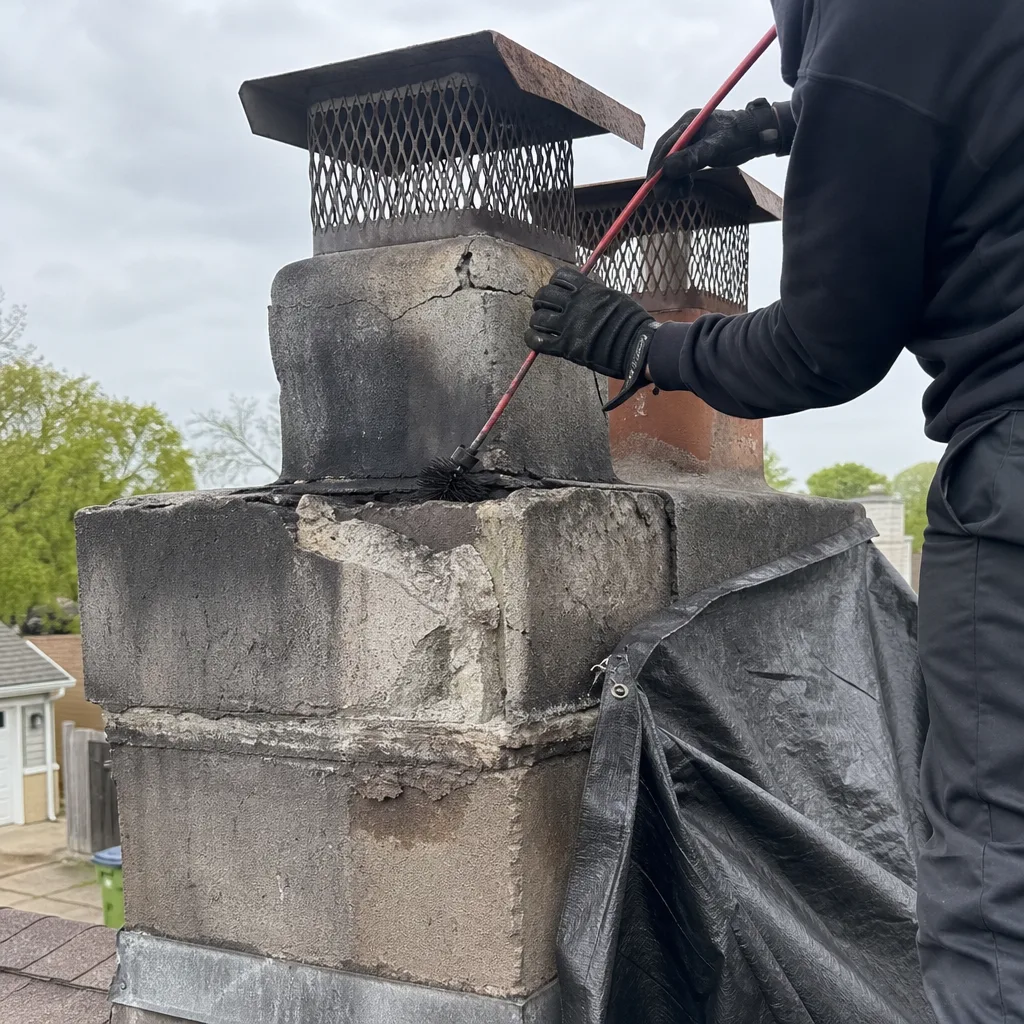 Before
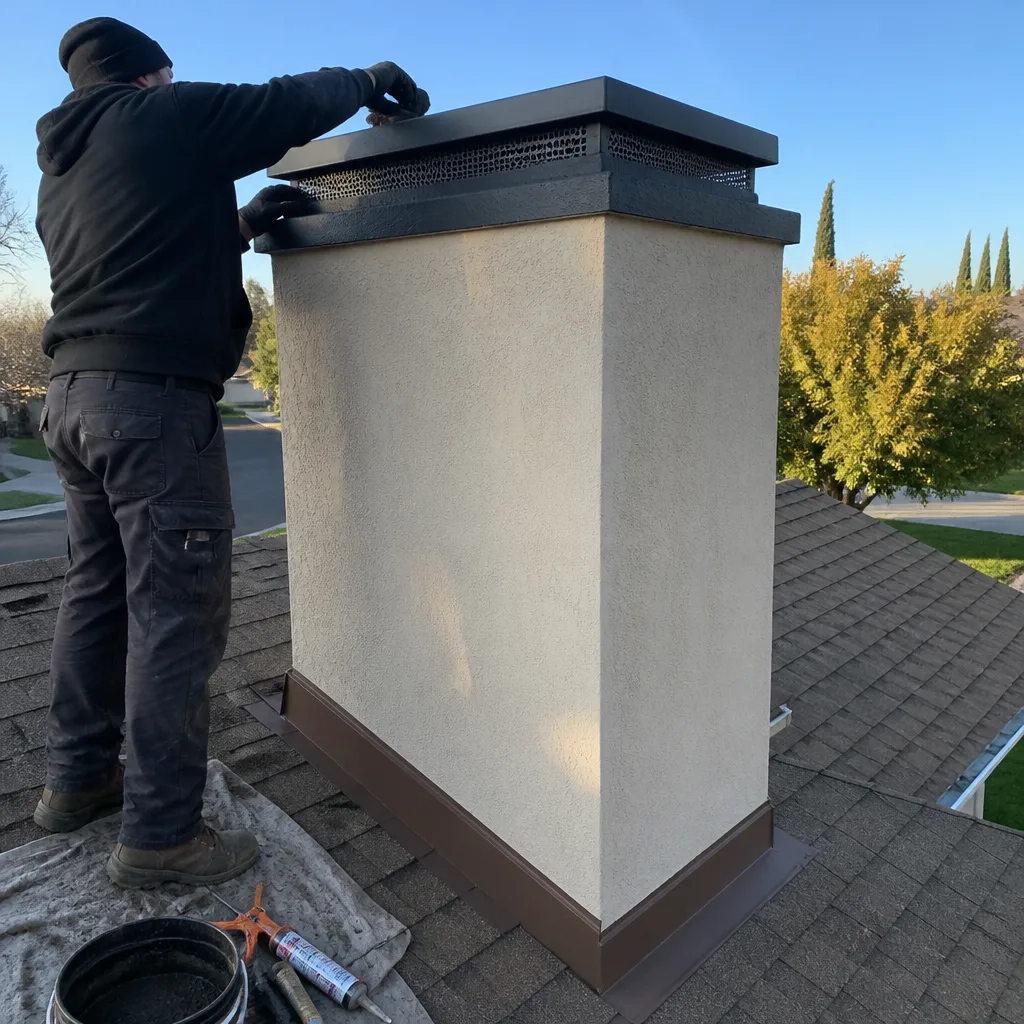 After
 Before
 After
 Before
 After